Suspected Flood Damage: A Checklist Before Buying a Vehicle
A freshly cleaned vehicle can still need a careful flood-damage investigation. Treat suspicious observations as questions for a qualified inspector, not a diagnosis from photographs. Decide whether the available evidence is sufficient before bidding or planning transport.
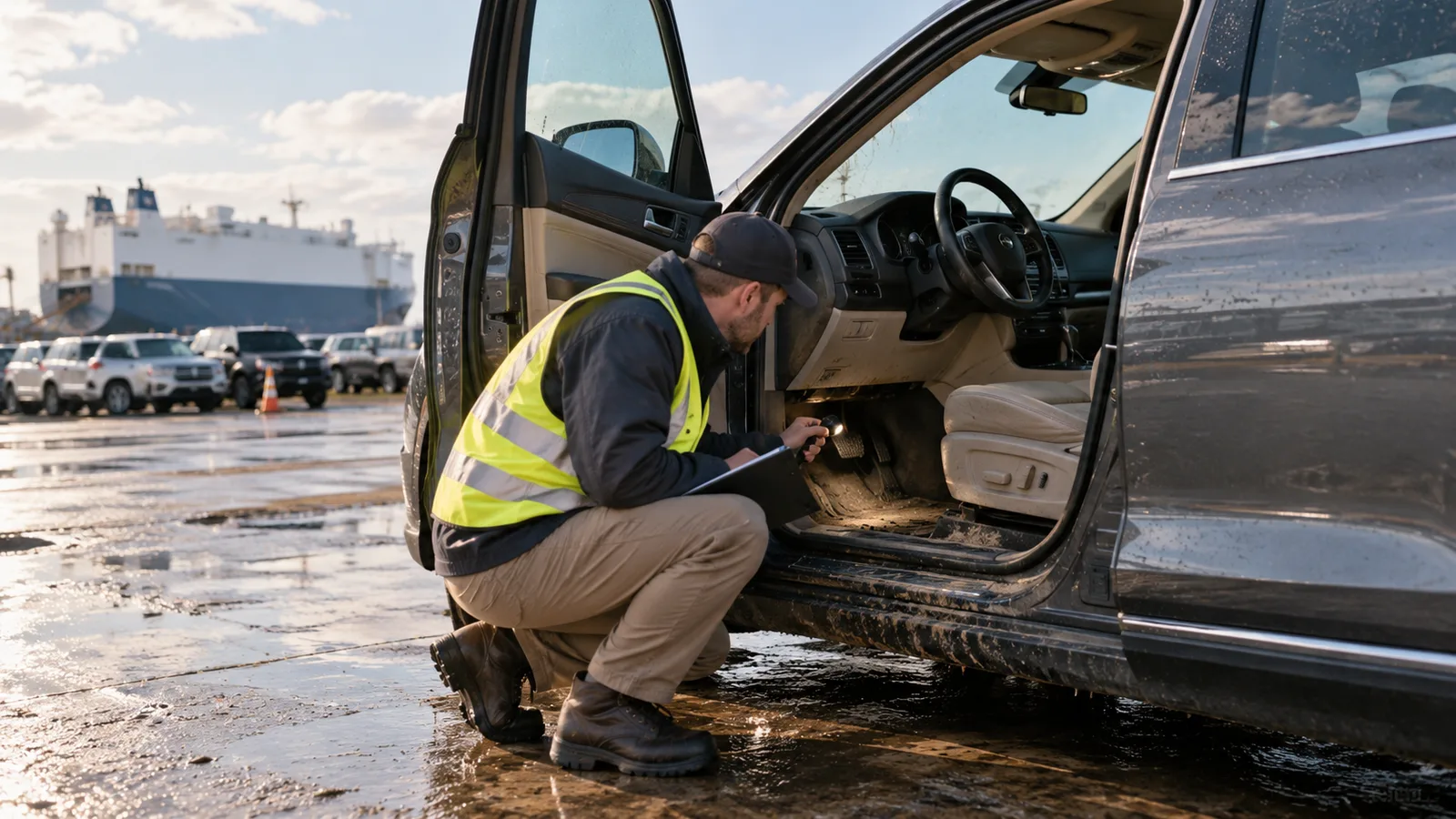
Collect specific observations
NICB identifies stains, silt, mildew and unusual corrosion among flood warning signs. Ask for clear photographs of accessible interior and storage areas and an inspection of suspicious locations. Record where each observation appears and what access was unavailable. A pleasant smell, new carpet or a clean exterior does not answer the question. Do not ask a seller or driver to dismantle components or energize a questionable vehicle simply to produce a reassuring video. [1]
Use history and inspection together
Collect the VIN, title history, listing disclosures and any available repair records. Ask a qualified inspector what could be checked, what remains uncertain and whether further assessment is necessary. NICB recommends history checks and a mechanic’s inspection; a missing reported event is not proof that damage never occurred. Request a written explanation rather than accepting “only cosmetic” or “already dried” as a complete assessment. [1]
Make the purchase decision before the shipping decision
Write down your unresolved condition, repair and eligibility questions. If the inspector cannot establish a workable assessment, pause the purchase decision rather than treating low price as the missing evidence. For a vehicle you proceed with, disclose known damage and actual operating condition to each transport provider and ask for acceptance. A transport quote is not a mechanical clearance or a guarantee that a destination will accept the vehicle.