Salvage Vehicles for Export: Separate Repair, Transport and Eligibility
A salvage vehicle presents three separate decisions: can it be economically repaired, can it be handled by the planned carriers, and can it enter and be used at the destination? A positive answer to one does not establish the others.
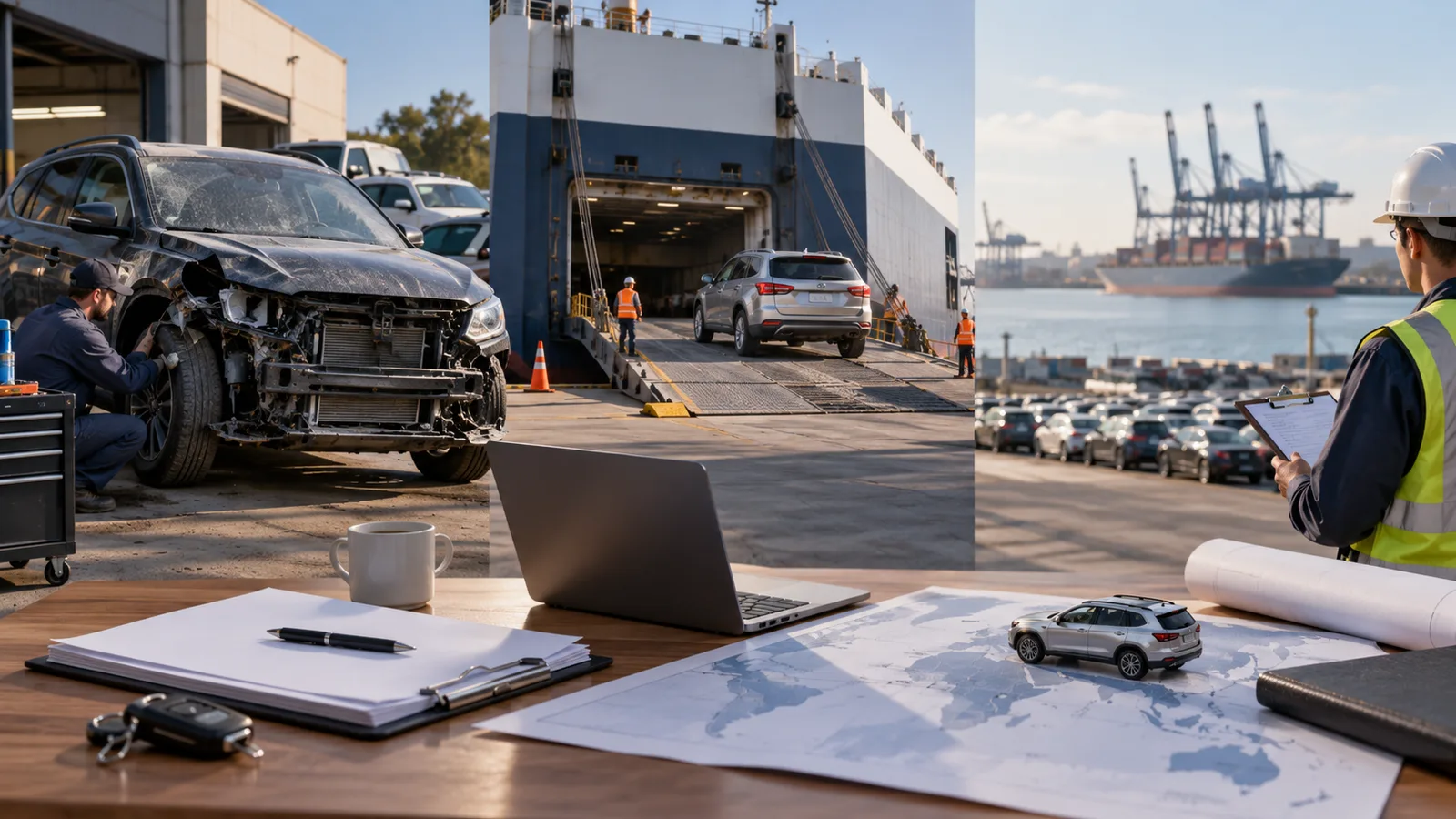
Verify what the label means
Read the exact ownership/title description and obtain the underlying records. Labels and legal consequences depend on the issuing jurisdiction. Do not equate ‘repairable’ in a listing with permission to register or import. Have the responsible destination authority or professional confirm the vehicle-specific position before purchase.
Inspect uncertainty, not just visible dents
Ask a qualified inspector about structural, electrical, flood and mechanical concerns. Separate visible observations from a repair diagnosis. Include missing components, diagnostic work and loading needs in your budget. Photos alone cannot prove that a vehicle needs only cosmetic repairs.
Obtain handling acceptance
Describe leaks, loose parts, wheel movement, steering and keys to every transport operator. Confirm restrictions before inland dispatch to a port. Keep written acceptance with the agreed loading method, and stop the plan if the actual condition changes. A repaired appearance does not remove documentary or destination restrictions.