Vehicle History and Condition: A Checklist Before Purchase
Use vehicle history and inspection information together. A report helps identify recorded events; an inspection describes the vehicle you are considering today. Neither should be treated as a complete guarantee of condition.
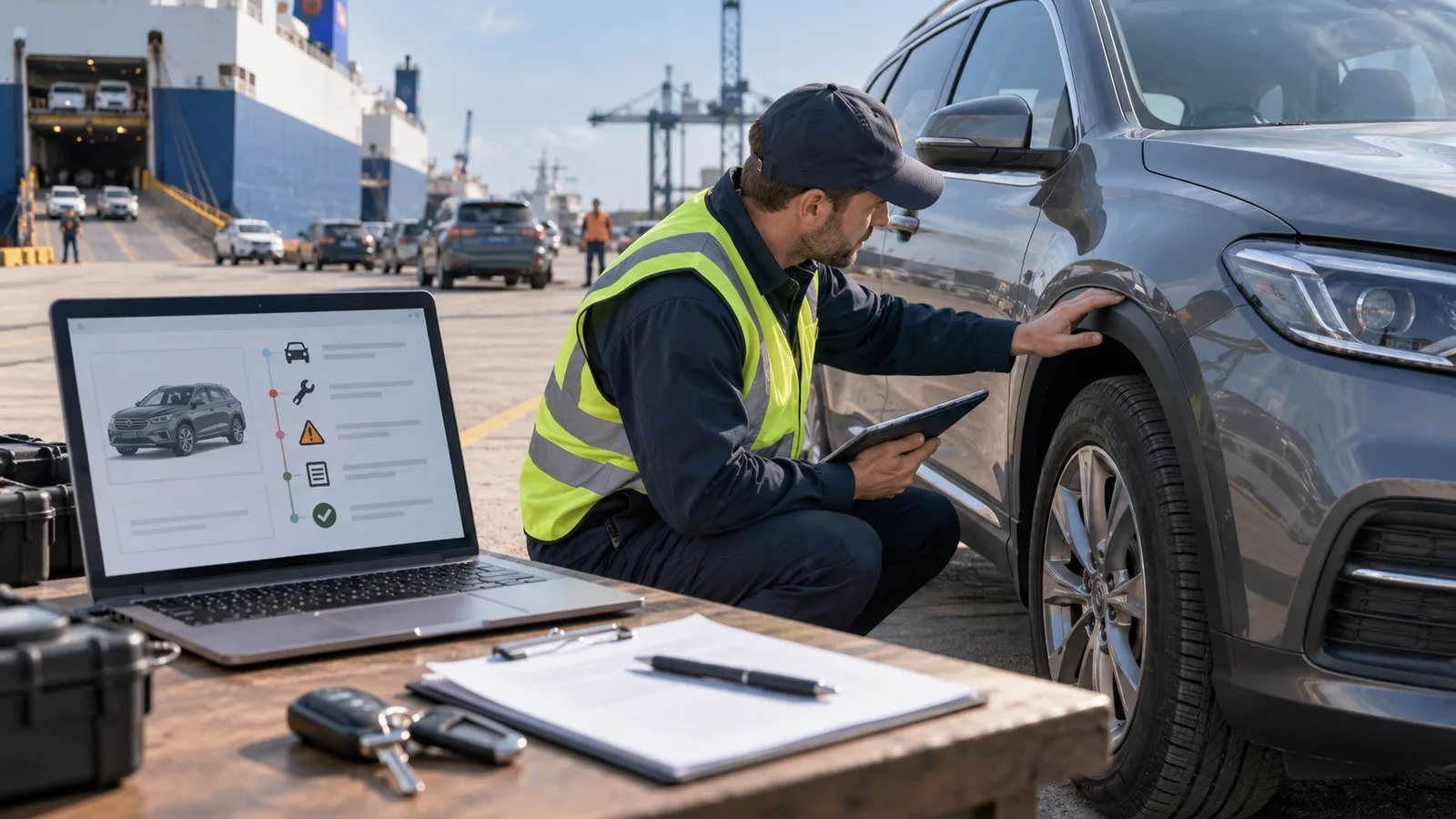
Match the identity first
Compare the VIN in the listing, ownership record, report and available vehicle photographs. Resolve conflicting model, year or mileage details before sending money. Retain the dated records so later changes can be explained rather than silently replacing the evidence.
Ask about missing evidence
List unverified damage, repairs, warning lights, keys, start/roll status and maintenance history. Ask a qualified inspector what additional checks are possible. Missing entries in a history report do not establish that a vehicle has never been damaged. Treat flood indicators and electrical concerns as inspection questions, not diagnoses from a photo.
Turn findings into a decision
For each issue, record the evidence, possible budget effect and next action. Decide whether to inspect further, revise the purchase budget or reject the candidate. Send relevant loading limitations to the carrier after purchase; buying information should become transport instructions when it affects safe handling.