Shipping a Non-Running Vehicle: Questions Before Booking
‘Non-running’ describes a problem, not a loading method. A vehicle with a flat battery, locked wheels or structural damage can require very different equipment. Describe the limitations precisely so the pickup site and each carrier can decide whether and how to accept it.
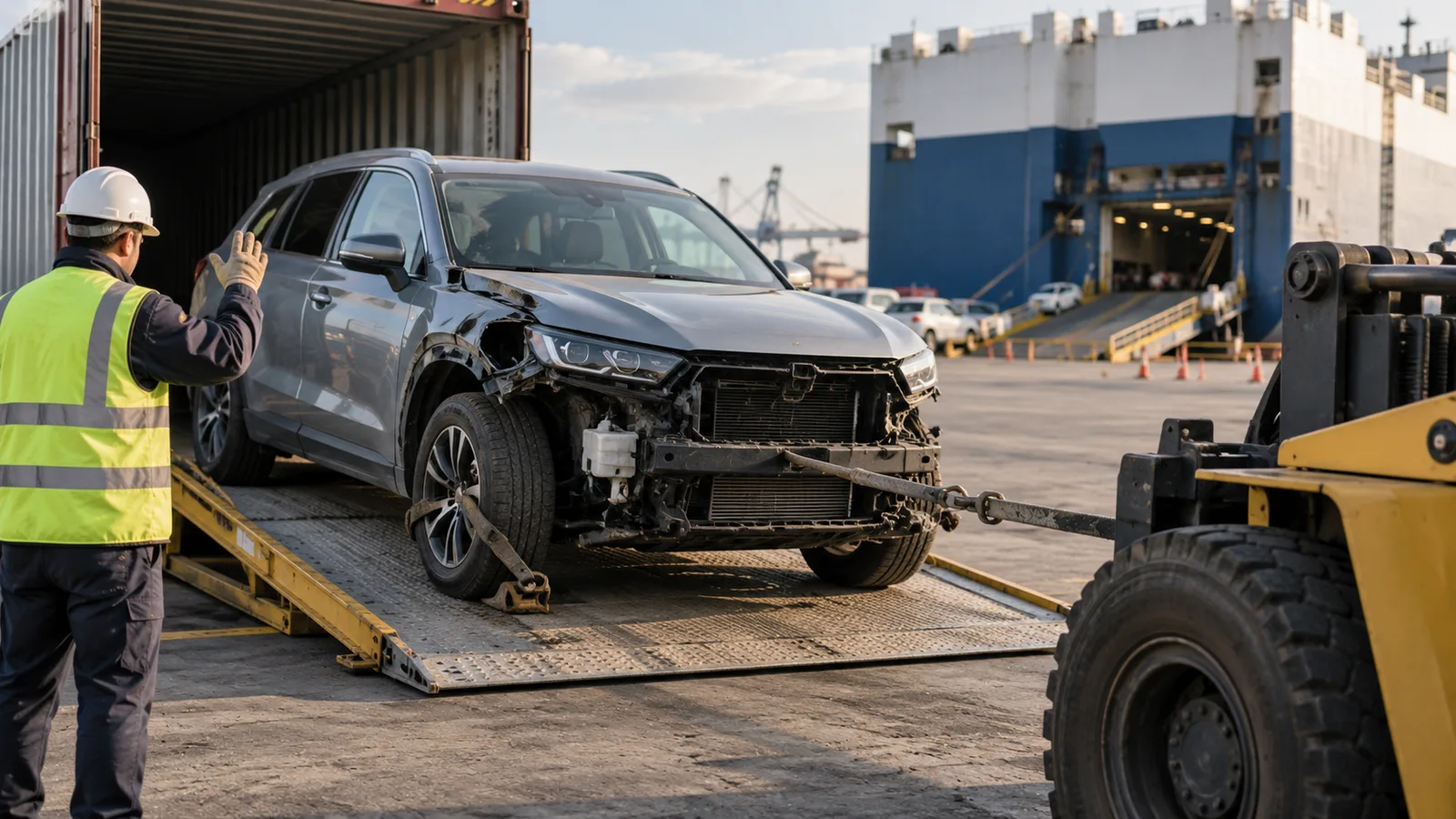
Describe movement, not just engine status
Confirm whether the vehicle rolls freely, steers, brakes and has accessible tow or recovery points. Record keys, tire condition, dimensions, leaks and detached parts. Share recent photographs rather than assuming auction images show the current state. If an answer is unknown, label it unknown; a driver cannot plan safe loading from an optimistic guess.
Get acceptance for every transport leg
Ask who provides equipment at collection and delivery, what space it needs and what the sites permit. For ocean transport, obtain the operator’s condition and damage acceptance before inland dispatch. Acceptance by a truck carrier does not guarantee acceptance by a vessel operator. Confirm handling charges, exclusions and the response if the vehicle cannot be loaded as described.
Keep a fallback decision
If a vehicle arrives with locked wheels when it was described as rolling, stop and reassess equipment, location and cost. Ask whether repair, a different carrier or a different shipping method is realistic before approving extra work. Keep the new condition note with the shipment file. Do not attempt improvised recovery or treat transport planning as a repair diagnosis.