Imported Vehicle Repairs: Check Parts and Workshop Costs Before Buying
A low purchase price can lose its appeal when the needed parts or workshop support are unavailable at the destination. Investigate the exact vehicle and identified repair work before purchase. Replace a general “parts are easy to find” assurance with a written, vehicle-specific plan.
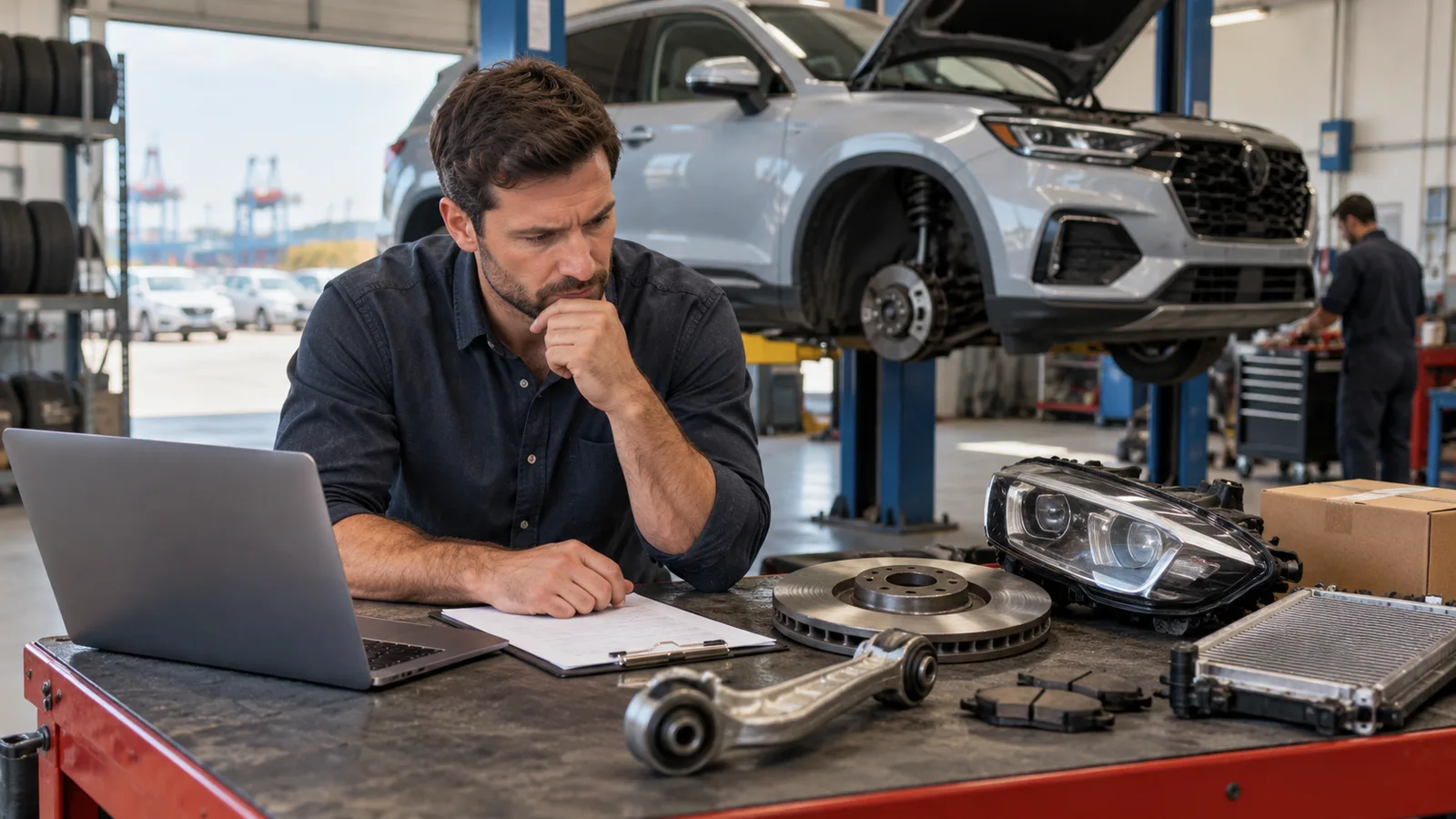
Turn an inspection into a parts request
Give the destination workshop the VIN, model details, inspection findings and photographs. Ask it to identify the required parts and distinguish confirmed defects from items that need diagnosis. Obtain supplier confirmation of compatibility, stock status, delivery terms and return conditions. Keep a substitute-part proposal separate until the workshop accepts it. Do not assume two vehicles with the same model name use identical components.
Price the work and its dependencies
Request a written workshop estimate separating diagnosis, parts and labor. The FTC’s repair guidance explains the value of a written estimate; use local workshop terms for the destination job. Add parts transport, applicable import charges and any movement of an immobilized vehicle as separate lines. Ask what changes if dismantling reveals another problem. Identify work needed for safe handling separately from work needed for road use, registration or resale. [1]
Compare an assessed case with an unresolved case
Keep two budget columns: the work supported by current evidence and the additional exposure that remains unresolved. Note the currency, quote validity and party responsible for every input. If a critical part cannot be sourced or the workshop cannot assess the repair, do not hide that gap inside a small generic contingency. Compare the complete purchase, shipping and repair total with another vehicle. Carry known condition limitations into the transport request.