EV and Hybrid Vehicle Shipping: Confirm Battery and Handling Requirements
An electric or hybrid vehicle needs model-specific handling information and explicit carrier acceptance. Battery condition, damage and the selected transport mode can change what the operator will accept.
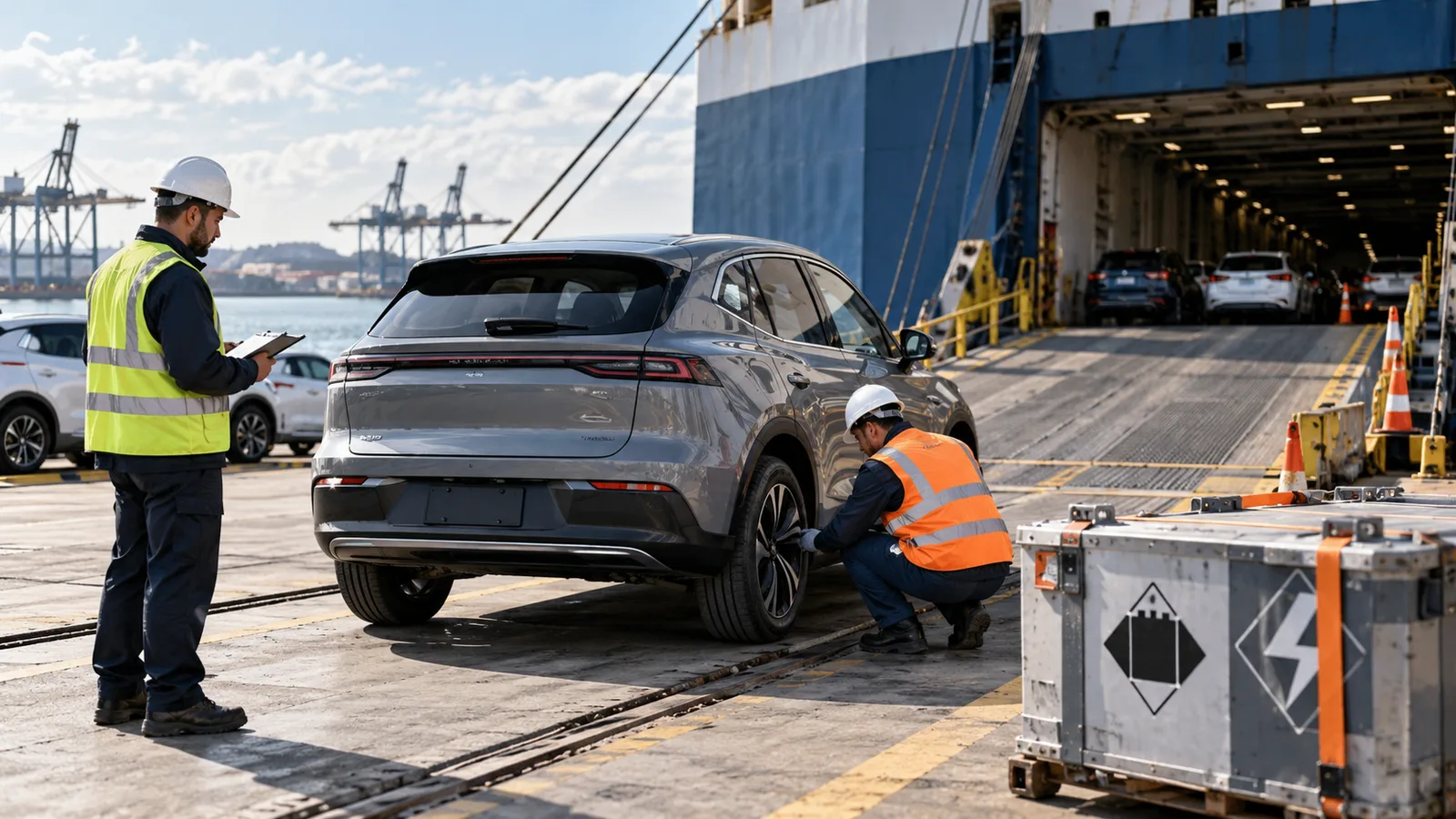
Identify the actual vehicle and condition
Provide year, model, powertrain, dimensions and whether the vehicle can move using the manufacturer’s approved procedure. Disclose battery warnings, collision damage, flooding or known battery defects. Do not describe a damaged EV as an ordinary non-running car without mentioning the battery concern.
Ask each operator for current instructions
Confirm acceptance, required documentation and preparation directly with the inland carrier and ocean operator. Ask about keys, alarms, charging state and approved loading/towing procedures where relevant. Do not invent one universal charging percentage or assume an inland acceptance applies to the ocean leg.
Plan ownership at the destination
Before purchase, investigate charging compatibility, qualified repair support, battery evidence and import eligibility. Keep transport acceptance and ownership suitability as separate decisions. If battery safety is uncertain, seek qualified advice and operator instructions before arranging movement.