Boat Shipping Preparation: Dimensions, Support and Handoffs
A boat shipping request needs more than the hull length. The trailer or cradle, handling points and destination collection plan can change the equipment required. Build a cargo information pack before seeking a confirmed transport offer; acceptance depends on the operator and route.
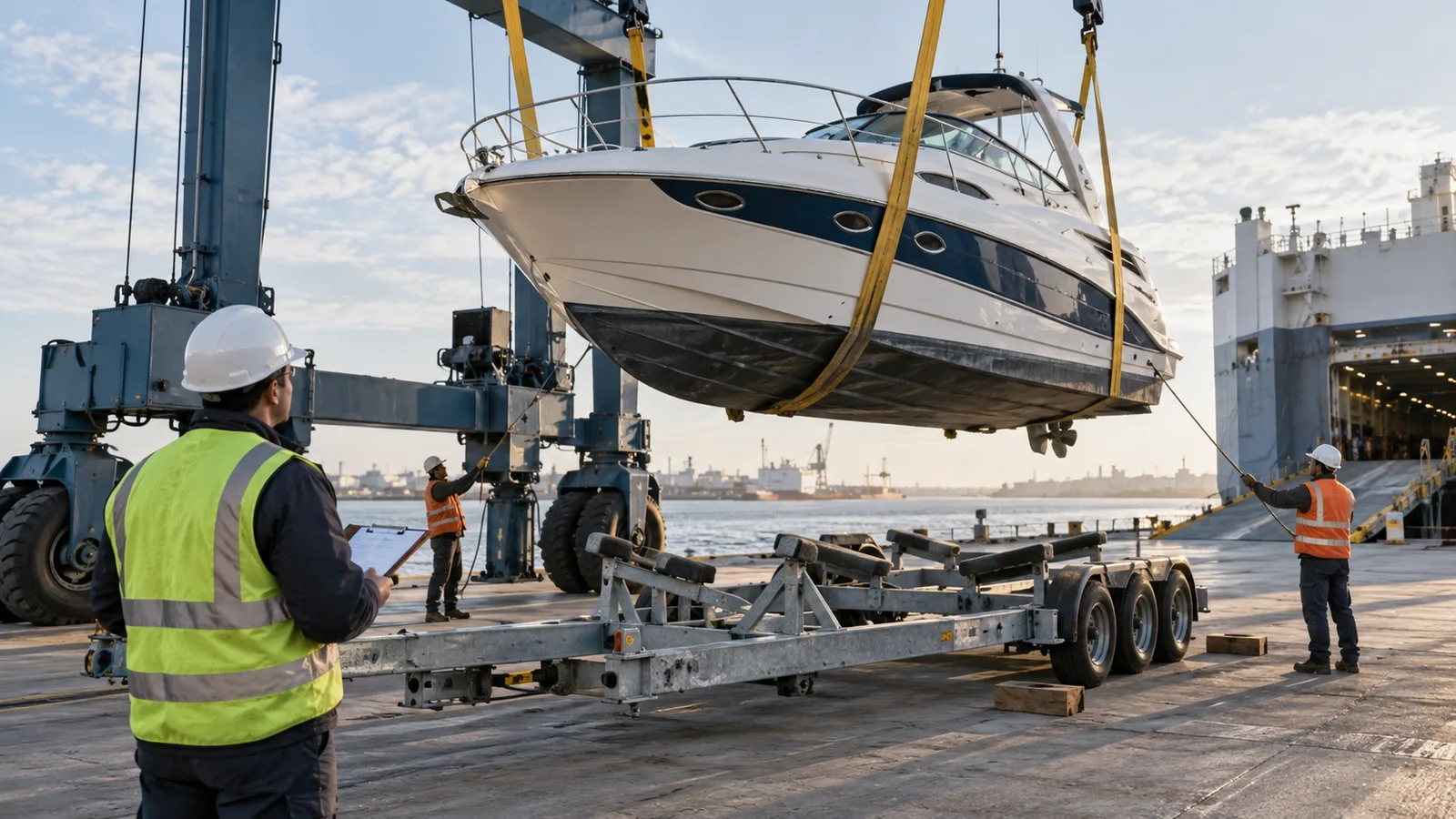
Describe the complete transport footprint
Measure the boat in its proposed transport position and identify removable equipment separately. Record overall dimensions and weight, then specify whether these include an owner-supplied trailer or cradle. Photograph projections, the support arrangement and identification plates. Ask the provider how it wants measurements reported. Wallenius Wilhelmsen’s guidance includes attached projections and owner-supplied carrying equipment; confirm the booked operator’s own instructions.
Agree on support and handling responsibility
Ask who supplies and approves the cradle, trailer, lifting plan and securing arrangement at each transfer. Describe the hull material, engine position, known damage and any movement restrictions; do not guess suitable lifting points. For a trailer, provide its condition, coupling details and whether wheels and brakes function. Request written acceptance of the proposed arrangement before moving the boat to a terminal. A successful road tow does not establish suitability for ocean handling.
Prepare collection at both ends
Separate inland movement, terminal handling, ocean transport and destination collection in the quote. Identify excluded lifting, storage and support-equipment charges. Ask what cleaning, fuel, batteries, loose equipment and onboard contents require before delivery. Keep ownership records, condition photographs and a packing list together. Name the destination collector and confirm equipment availability. Use the shipping inquiry to discuss feasibility before treating any method or departure as booked.