Auction Vehicle Through a Transit Country: Map Every Handoff
A transit country adds a border and a custody decision to an auction vehicle’s journey. Before accepting a ground-and-ocean proposal from FleetX, identify where the vehicle travels, who handles each movement and whether a stop is transit, temporary entry or final import.
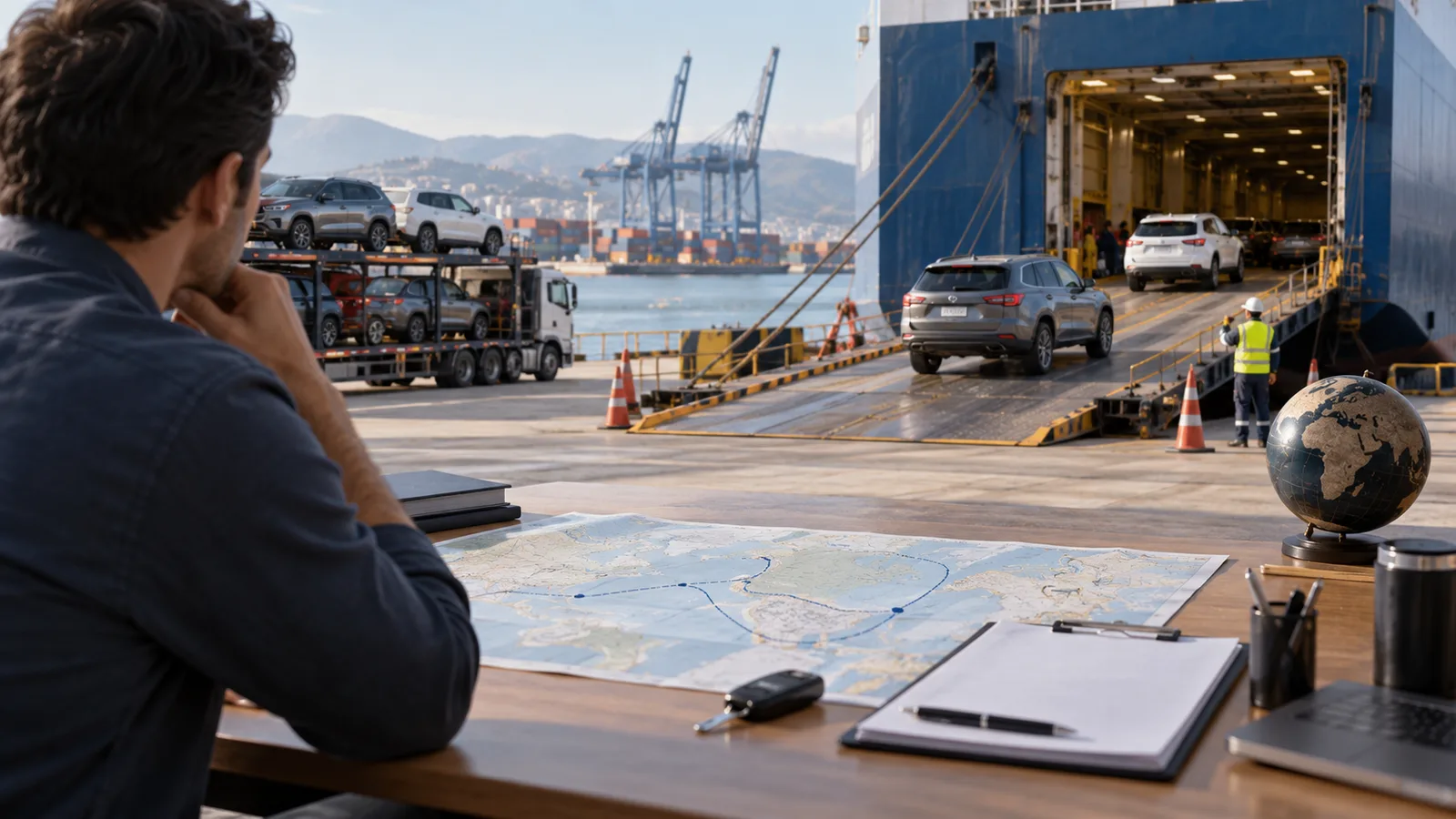
Draw the complete route
Record the Copart or IAA collection country, each crossing, staging location, proposed ocean loading point and final receiving country. Show any workshop or storage stop explicitly. Ask FleetX which physical handoffs are included and which require another appointed party. A shorter driving distance alone is not evidence that the route is workable.
Get the applicable border decision
Ask the responsible customs specialist to identify the applicable procedure, declarations, security requirements if any, permitted receiving arrangements and evidence of completion. Keep these answers specific to the actual route and vehicle. Do not reuse a transit instruction from another country or treat an ocean reservation as permission to cross an intermediate border.
Connect custody and document ownership
Assign an owner to each original document and each vehicle receipt. Confirm who updates FleetX if the transit plan is held or redirected. Compare extra handling, storage exposure and document work alongside transport charges. Leave a route unresolved until the appropriate parties confirm their own requirements; this guide offers no universal transit entitlement.
Record each crossing before comparing the onward route
An intermediate country can introduce a separate custody handoff and a separate regulatory question. Start with the proposed physical route and distinguish passing through, temporary storage and delivery for use or resale. Ask FleetX to review the transport legs while the responsible customs contact checks the applicable movement; there is no single transit answer for every country.
| Review item | Evidence to prepare | Question or next action |
|---|---|---|
| Movement at each border | Entry and exit countries, purpose, proposed storage and responsible customs contact | Which procedure fits the actual vehicle and intended use? |
| Custody between legs | Physical handoff site, carrier/receiver roles and accepted receiving instructions | Who accepts the unit and confirms readiness for the next leg? |
| Documents and amendments | Document holder, filing references and changed route instructions | Does a route change require a new review before onward dispatch? |
Keep the route record with the quote assumptions, including unanswered border or receiving questions. For a Canadian segment, CBSA exporter-reporting guidance is a research starting point, not proof that a declaration is always required or that an exemption applies. Obtain the actual route-specific answer before turning a proposed itinerary into dispatch instructions.